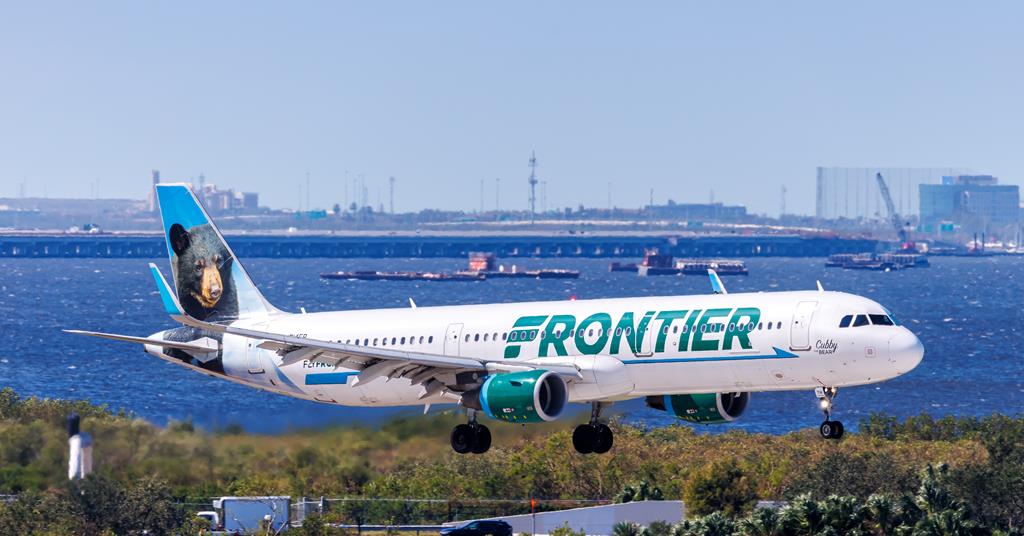
Airbus A320neo-family aircraft have not been involved in any load-reduction device activation events relating to CFM International Leap-1A engines, according to the European Union Aviation Safety Agency.
But EASA is advising interim measures to prepare crews for possible smoke incidents after two such occurrences that followed LRD activation on Leap-1B powerplants, fitted to Boeing 737 Max jets.
If the engine fan becomes substantially unbalanced – from blade damage, for example – the LRD is designed to reduce loads transmitted to the engine structure.
But its activation can create an oil leakage path into the compressor and contaminate bleed air being delivered to the environmental control system – leading to dense smoke in the cabin and possibly the cockpit.
This smoke can persist until the affected engine is shut down, or its bleed system isolated, which might require crew action.
EASA says A320neo-family pilots, in the event of LRD activation, can secure the affected engine and mitigate smoke contamination by following quick-reference handbook procedures for dealing with engine failure and smoke.
While safety assessments of LRD events – and potential design changes to manage related oil-leak risks – are still in progress, the European regulator is issuing interim recommendations.
EASA says operators should identify to crews which aircraft in their fleets are fitted with Leap engines that feature LRDs.
It adds that crews should be prepared for possible LRD activation, and dense smoke in the cockpit, in the event of severe engine damage or high vibrations.
Such scenarios, it says, should be “properly emphasised” during crew conversion and recurrent training to ensure pilots are aware of the “challenges” of LRD events.


Airbus A320neo-family aircraft have not been involved in any load-reduction device activation events relating to CFM International Leap-1A engines, according to the European Union Aviation Safety Agency.
But EASA is advising interim measures to prepare crews for possible smoke incidents after two such occurrences that followed LRD activation on Leap-1B powerplants, fitted to Boeing 737 Max jets.
If the engine fan becomes substantially unbalanced – from blade damage, for example – the LRD is designed to reduce loads transmitted to the engine structure.
But its activation can create an oil leakage path into the compressor and contaminate bleed air being delivered to the environmental control system – leading to dense smoke in the cabin and possibly the cockpit.
This smoke can persist until the affected engine is shut down, or its bleed system isolated, which might require crew action.
EASA says A320neo-family pilots, in the event of LRD activation, can secure the affected engine and mitigate smoke contamination by following quick-reference handbook procedures for dealing with engine failure and smoke.
While safety assessments of LRD events – and potential design changes to manage related oil-leak risks – are still in progress, the European regulator is issuing interim recommendations.
EASA says operators should identify to crews which aircraft in their fleets are fitted with Leap engines that feature LRDs.
It adds that crews should be prepared for possible LRD activation, and dense smoke in the cockpit, in the event of severe engine damage or high vibrations.
Such scenarios, it says, should be “properly emphasised” during crew conversion and recurrent training to ensure pilots are aware of the “challenges” of LRD events.
Source link
Share This:
skylinesmecher
Plan the perfect NYC Memorial Day weekend
Pack only what you need and avoid overpacking to streamline the check-in and security screening…
LA’s worst traffic areas and how to avoid them
Consider using alternative routes, such as Sepulveda Boulevard, which runs parallel to the 405 in…
AerCap orders 100 A320neo-family jets in Frontier-linked transaction
Irish-based leasing giant AerCap is ordering another 100 Airbus A320neo-family jets, delivery of which will…
Air Astana co-founder BAE Systems exits carrier after nearly 25 years
UK aerospace firm BAE Systems is selling its remaining interest in Kazakh operator Air Astana…
UK to buy additional Thales Martlet missiles as counter-drone weapon demand spikes
With demand for air-launched counter-drone capability having spiked due to the conflict in the Middle…
Thales eyes expansion of contrail-avoidance trials after Amelia test success
Thales is eyeing a large-scale trial of a new contrail-avoidance system to validate the solution…
European airline leaders call for regulators to stop taking aviation progress for granted | News
European airline leaders are calling on the region’s regulators to take steps to support the…
Warsaw-based Draco Aircraft pitches HyperSTOL design to Polish military and NATO operators
Warsaw-based Draco Aircraft has entered into partnership with two Polish military institutions to pitch a…
P&WC details hybridisation plan for PW127 engine that could power ATR Evo
Pratt & Whitney Canada parent RTX has provided more details on the advanced hybrid-electric PW127…
Anduril’s UK boss eyes growth opportunities as autonomous system demand takes off
Anduril Industries is eyeing significant further growth in the UK, as the company’s in-country presence…
United Aircraft passenger airliner prototypes to undergo natural icing tests
United Aircraft is to undertake natural icing tests on three new aircraft models, with prototypes…
Thales to supply new communications system for Pilatus PC-7 trainer operator
Thales has been chosen to provide a radio management system for use by an undisclosed…