London City airport is seeking to implement a shallower glideslope of 4.49° – compared with the current 5.5° – at both runway ends to accommodate aircraft including the Airbus A320neo.
The airport’s operator has detailed the modification in a consultation document. If approved it would take effect from 21 January next year.
Its proposal means introducing RNP-AR navigation procedures for approach paths which closely match current arrival patterns to London City.
The current steep glideslope – for which aircraft have to be specially certified – will be maintained, and continue to be used by most traffic, and the precision-approach path indicator lamps will stay at 5.5°.
But authorised operators will be able to use the new approach. Aircraft will have to be capable of accurately following the RNP-AR procedures to ensure that, with the lower glideslope, obstacle clearance is safely maintained.
While some of the technical integration is still being finalised, the RNP parameter is expected to start at 1.0 at the outer elements and reduce to 0.3 on final – although it could be brought down as far as 0.1 if there are “operational advantages”, says the consultation document.
“Final RNP values have not yet been determined,” it adds.
The consultation document says the shallower glideslope will “enable and encourage” a quicker transition to efficient, larger-capacity aircraft.
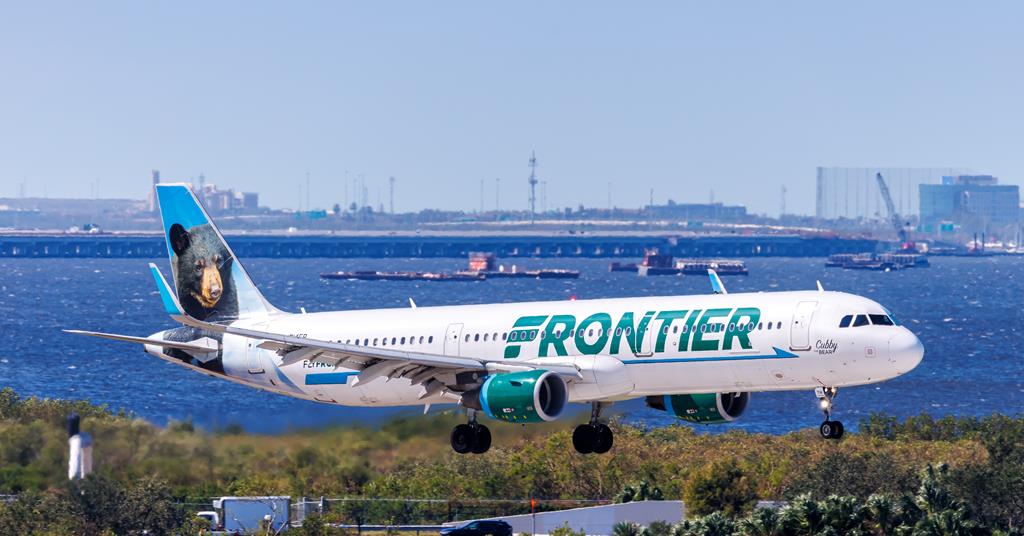
It adds that the A320neo is expected to be the “main user” of the additional procedures. The twinjet is shorter than the Embraer 195-E2 – which already operates at London City – and they have similar wingspans.
Although the A320neo has a higher passenger capacity, it is not certified for the 5.5° approach to the downtown airport.
The airspace change proposal only formally considers the A320neo but the document states that Embraer E2 models will “most likely” be future candidates.
“Other new generation regional or corporate aviation aircraft capable of using our runway may also seek to use the shallower approach,” it adds. The airport operator is not intending to restrict access to any specific aircraft type.
It estimates that, with the modified airspace and glideslope, the growth of aircraft movements will slow – cutting the overall number of flights over the 12-year period 2027-38 by 76,500 compared with the current forecast, while accommodating 14 million more passengers.
All departures would continue to follow the current standard instrument routes which will remain unchanged. The airport’s operator claims over 110,000 people will be exposed to less noise.
London City’s public consultation runs until 17 May.
“Our proposals would allow us to grow more sustainably by reducing the number of flights and the level of noise people would experience when compared with not making this change,” says newly-appointed chief executive Andy Cliffe.
He adds that the increased access will permit the introduction of new airlines and bring new destinations within the airport’s network.


London City airport is seeking to implement a shallower glideslope of 4.49° – compared with the current 5.5° – at both runway ends to accommodate aircraft including the Airbus A320neo.
The airport’s operator has detailed the modification in a consultation document. If approved it would take effect from 21 January next year.
Its proposal means introducing RNP-AR navigation procedures for approach paths which closely match current arrival patterns to London City.
The current steep glideslope – for which aircraft have to be specially certified – will be maintained, and continue to be used by most traffic, and the precision-approach path indicator lamps will stay at 5.5°.
But authorised operators will be able to use the new approach. Aircraft will have to be capable of accurately following the RNP-AR procedures to ensure that, with the lower glideslope, obstacle clearance is safely maintained.
While some of the technical integration is still being finalised, the RNP parameter is expected to start at 1.0 at the outer elements and reduce to 0.3 on final – although it could be brought down as far as 0.1 if there are “operational advantages”, says the consultation document.
“Final RNP values have not yet been determined,” it adds.
The consultation document says the shallower glideslope will “enable and encourage” a quicker transition to efficient, larger-capacity aircraft.
It adds that the A320neo is expected to be the “main user” of the additional procedures. The twinjet is shorter than the Embraer 195-E2 – which already operates at London City – and they have similar wingspans.
Although the A320neo has a higher passenger capacity, it is not certified for the 5.5° approach to the downtown airport.
The airspace change proposal only formally considers the A320neo but the document states that Embraer E2 models will “most likely” be future candidates.
“Other new generation regional or corporate aviation aircraft capable of using our runway may also seek to use the shallower approach,” it adds. The airport operator is not intending to restrict access to any specific aircraft type.
It estimates that, with the modified airspace and glideslope, the growth of aircraft movements will slow – cutting the overall number of flights over the 12-year period 2027-38 by 76,500 compared with the current forecast, while accommodating 14 million more passengers.
All departures would continue to follow the current standard instrument routes which will remain unchanged. The airport’s operator claims over 110,000 people will be exposed to less noise.
London City’s public consultation runs until 17 May.
“Our proposals would allow us to grow more sustainably by reducing the number of flights and the level of noise people would experience when compared with not making this change,” says newly-appointed chief executive Andy Cliffe.
He adds that the increased access will permit the introduction of new airlines and bring new destinations within the airport’s network.
Source link
Share This:
skylinesmecher
Plan the perfect NYC Memorial Day weekend
Pack only what you need and avoid overpacking to streamline the check-in and security screening…
LA’s worst traffic areas and how to avoid them
Consider using alternative routes, such as Sepulveda Boulevard, which runs parallel to the 405 in…
AerCap orders 100 A320neo-family jets in Frontier-linked transaction
Irish-based leasing giant AerCap is ordering another 100 Airbus A320neo-family jets, delivery of which will…
Air Astana co-founder BAE Systems exits carrier after nearly 25 years
UK aerospace firm BAE Systems is selling its remaining interest in Kazakh operator Air Astana…
UK to buy additional Thales Martlet missiles as counter-drone weapon demand spikes
With demand for air-launched counter-drone capability having spiked due to the conflict in the Middle…
Thales eyes expansion of contrail-avoidance trials after Amelia test success
Thales is eyeing a large-scale trial of a new contrail-avoidance system to validate the solution…
European airline leaders call for regulators to stop taking aviation progress for granted | News
European airline leaders are calling on the region’s regulators to take steps to support the…
Warsaw-based Draco Aircraft pitches HyperSTOL design to Polish military and NATO operators
Warsaw-based Draco Aircraft has entered into partnership with two Polish military institutions to pitch a…
P&WC details hybridisation plan for PW127 engine that could power ATR Evo
Pratt & Whitney Canada parent RTX has provided more details on the advanced hybrid-electric PW127…
Anduril’s UK boss eyes growth opportunities as autonomous system demand takes off
Anduril Industries is eyeing significant further growth in the UK, as the company’s in-country presence…
United Aircraft passenger airliner prototypes to undergo natural icing tests
United Aircraft is to undertake natural icing tests on three new aircraft models, with prototypes…
Thales to supply new communications system for Pilatus PC-7 trainer operator
Thales has been chosen to provide a radio management system for use by an undisclosed…