Leonardo Helicopters has edged a step closer to flying its AW09-based Proteus technology demonstrator for the UK Royal Navy (RN), with the unmanned aircraft having successfully undergone its first ground runs.
Performed at the developer’s Yeovil site in Somerset, southwest England, the activity tested the roughly 3t aircraft’s “engine, systems and rotor blades”, the RN said on 2 December.
“This is the first step towards creating a truly autonomous vertical take-off and landing aircraft in this weight class,” adds the service, which plans to in the future operate hybrid air wings equipped with a mix of crewed and uncrewed assets.
Leonardo Helicopters has produced the Proteus demonstrator as the centrepiece of a programme valued at £60 million ($79 million). Once flying, it will be used to show the utility of an autonomous uncrewed platform in the anti-submarine warfare role, including deploying and monitoring sonobuoys.
“By embracing drone helicopters, the navy aims to search wider stretches of ocean for longer periods without putting strain on aircrew, who could be deployed on other critical sorties,” the RN says.
It notes that a future operational vehicle in this class could also undertake roles such as “airborne surveillance and control, search and rescue, logistics re-supply for ground forces, weapon delivery and intelligence-gathering”.
The Proteus vehicle is equipped with a modular bay capable of carrying a payload of up to 1t.
“It combines cutting-edge technology, the experience of recent conflicts and has enormous potential to shape the Royal Navy’s future hybrid air wing,” says Captain David Gillett, head of maritime aviation and carrier strike in the service’s develop directorate.
“Proteus is equipped with cutting-edge onboard software capabilities, carrying a suite of sensors and systems that allow it to sense its environment, make decisions and act accordingly,” notes Nigel Colman, Leonardo’s managing director, helicopters UK.
Speaking at the DSEI exhibition in London in mid-September, Leonardo officials said they were expecting the Proteus programme’s Phase 3A activity – including an initial series of flight trials – to be completed before the end of this year.

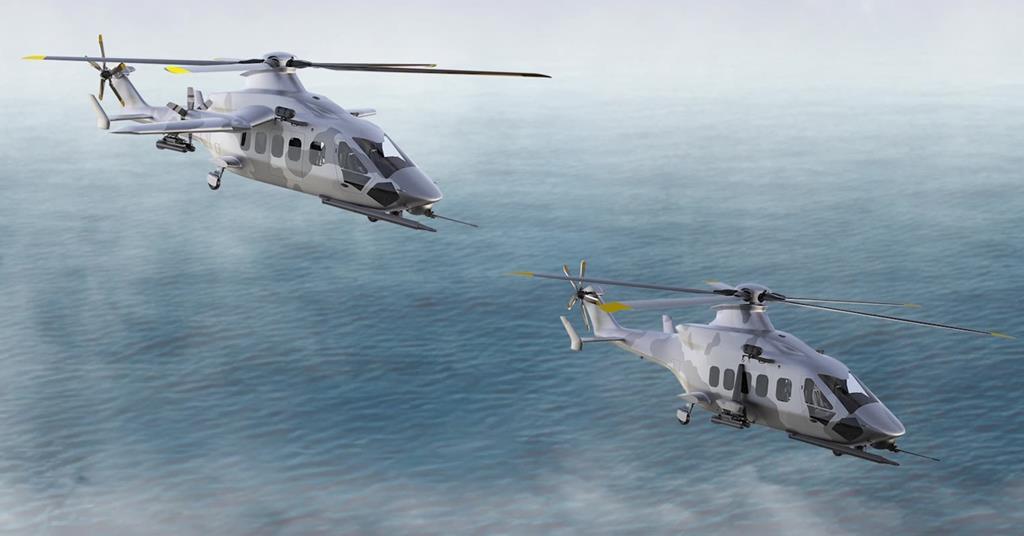

Leonardo Helicopters has edged a step closer to flying its AW09-based Proteus technology demonstrator for the UK Royal Navy (RN), with the unmanned aircraft having successfully undergone its first ground runs.
Performed at the developer’s Yeovil site in Somerset, southwest England, the activity tested the roughly 3t aircraft’s “engine, systems and rotor blades”, the RN said on 2 December.
“This is the first step towards creating a truly autonomous vertical take-off and landing aircraft in this weight class,” adds the service, which plans to in the future operate hybrid air wings equipped with a mix of crewed and uncrewed assets.
Leonardo Helicopters has produced the Proteus demonstrator as the centrepiece of a programme valued at £60 million ($79 million). Once flying, it will be used to show the utility of an autonomous uncrewed platform in the anti-submarine warfare role, including deploying and monitoring sonobuoys.
“By embracing drone helicopters, the navy aims to search wider stretches of ocean for longer periods without putting strain on aircrew, who could be deployed on other critical sorties,” the RN says.
It notes that a future operational vehicle in this class could also undertake roles such as “airborne surveillance and control, search and rescue, logistics re-supply for ground forces, weapon delivery and intelligence-gathering”.
The Proteus vehicle is equipped with a modular bay capable of carrying a payload of up to 1t.
“It combines cutting-edge technology, the experience of recent conflicts and has enormous potential to shape the Royal Navy’s future hybrid air wing,” says Captain David Gillett, head of maritime aviation and carrier strike in the service’s develop directorate.
“Proteus is equipped with cutting-edge onboard software capabilities, carrying a suite of sensors and systems that allow it to sense its environment, make decisions and act accordingly,” notes Nigel Colman, Leonardo’s managing director, helicopters UK.
Speaking at the DSEI exhibition in London in mid-September, Leonardo officials said they were expecting the Proteus programme’s Phase 3A activity – including an initial series of flight trials – to be completed before the end of this year.
Source link
Share This:
skylinesmecher
Plan the perfect NYC Memorial Day weekend
Pack only what you need and avoid overpacking to streamline the check-in and security screening…
LA’s worst traffic areas and how to avoid them
Consider using alternative routes, such as Sepulveda Boulevard, which runs parallel to the 405 in…
Airbus and Leonardo open to collaboration on next-generation military helicopter despite differences
Europe’s big two helicopter manufacturers remain open to collaborating on a next-generation military rotorcraft in…
Nose-wheel misalignment preceded DHC-6’s excursion and collision with helicopter
French investigators have disclosed that the nose-wheel of an Air Antilles De Havilland DHC-6 was…
Swedish military advances Esrange satellite launch site plans with SSC Space
NATO member Sweden has signed an agreement paving the way for it to commence satellite…
BA to return to Melbourne, Colombo after decades-long hiatus | News
British Airways will resume operations to Melbourne and Colombo during the Northern Winter schedule –…
Airbus Defence & Space prepares Valkyrie pair for ‘UCCA’ mission test alongside Eurofighter for Germany
Targeting the delivery of a ‘loyal wingman’-type capability for the German air force before the…
Baykar Technology aces AI-enabled drone swarm trials with five new ‘K2 Kamikaze’ aircraft
Turkish uncrewed aerial vehicle (UAV) developer Baykar Technology has unveiled what it describes as the…
Leonardo to demonstrate M-346 commanding two Baykar uncrewed fighters by mid-year
Leonardo will conduct the first demonstration flight later this year pairing its M-346 platform with…
B-1B bombers load bombs and cruise missiles at RAF Fairford for Iran air strikes
Amid the ongoing US-Israeli air campaign against Iran, US Air Force (USAF) bombers have been…
Russia expands Yelabuga UAV factory to 116 buildings for Ukraine war
Russia has vastly expanded its unmanned air vehicle (UAV) production facilities in the Yelabuga special…
Azur Air operations restricted as Russian regulator demands resolution of flight shambles
Russian air transport regulator Rosaviatsia has imposed restrictions on the operations of leisure carrier Azur…